Showing posts with label Non-fiction. Show all posts

Tuesday, July 10, 2018

Review: Why I'm No Longer... by Reni Eddo-Lodge

Why I'm No Longer Talking to White People About Race


When I saw the title of Reni Eddo-Lodge's latest work, I couldn't pass it by. Seriously! How much more poignant, jarring, could a title be without using any profanity? The title Why I'm No Longer Talking to White People About Racecouldn't be more intriguing for someone like me who no longer comments on threads with any hint of racial bias. I made the mistake of commenting on one of my Goodreads friends review of a book about the war on police, and next thing I know some white dude insinuated that I was ignorant or in a position to ignore all the government has done for low-income neighborhoods. 

Saturday, June 30, 2018

Review: Trump's America by Newt Gingrich

Trump's America: The Truth about Our Nation's Great Comeback

It was ok. That's what my two-star rating is.

I began Newt Gingrich's Trump's America in an effort to understand what President Trumps appeal is. A little more than 50% in I had to give up. It is true that Gingrich writes this in an approachable, precise, and captivating manner but I couldn't help but feel like this America that in some aspects, this "Make America Great Again" never existed. Or at least it never existed for people like me... or my parents... or grandparents.

Friday, May 18, 2018

Review: What Truth Sounds Like by Michael Eric Dyson

What Truth Sounds Like: Robert F. Kennedy, James Baldwin, and Our Unfinished Conversation About Race in America

What the truth sounds like, and is for me as I sit here and write this review is that I don't know how to review books such as this. Part of me wants to offer a review that strictly focuses on the writing. That (cowardly) part wants to remain neutral in all works that are social hot topics such as politics and race. I don't want to take a side. As reviewer, I feel it's a duty of sorts not to take a side. But another part, a bigger part of me knows I can't be honest and not share my opinions on the subject matter. The issues Michael Eric Dyson addresses in What Truth Sounds Like are happening all around whether or not I pick a side or engage in the conversation.

Friday, November 17, 2017

Review: Higher Is Waiting by Tyler Perry

Higher Is Waiting

I was stuck between giving Tyler Perry's Higher Is Waiting a 3-star rating but I took a breath, listened to what I think he's referring to as the voice of God and had to be honest with my heart and self and give it a 4-star rating. I tend to rate books on emotion rather than what Book-snobs might because the world is full of authors. Some share amazing stories that stay with us until we die, encased in the perfect prose, while introducing us to remarkable characters who we long to share a beer with. And there are others who write in an uncomplicated manner, with forgettable characters yet, the ride they take us on is thrilling. Allowing us an escape from the humdrum of what we know as life.

Monday, November 6, 2017

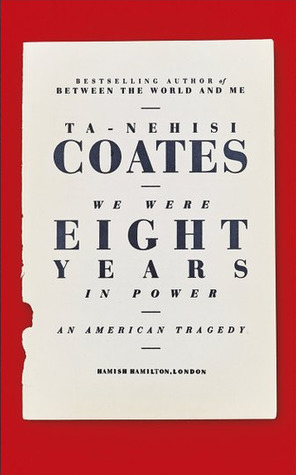
Review:We Were Eight Years in Power by Ta-Nehisi Coates

We Were Eight Years in Power by Ta-Nehisi Coates

Where do I begin when reviewing We Were Eight Years in Power: An American Tragedy by Ta-Nehisi Coates? I don't think... actually... I know I don't have the words to express how impressive this collection of articles is. I'm reminded of Zoolander 2 when Zoolander says he literally does not have the vocabulary to respond. I am in that moment. For those thinking what an idiot I am for throwing Zoolander into a review of Coates, who is a stunning writer, is absolutely correct. So...
For those familiar with Ta-Nahisi Coates are reintroduced to the ideas or experiences he had before writing said article during the eight years of Obama's presidency. For the rest of us, you need to read this and become acquainted with his brilliance. I put myself in the "rest of us" category because I was unaware he existed. In hindsight, I feel like I deprived myself for many years so it's imperative that I right this wrong and absorb all the Coates I can.

Tuesday, July 18, 2017

Review:Black Privilege by Charlamange tha God

Black Privilege by Charlamagne Tha God

To say Black Privilege:Opportunity Comes to Those Who Create Itwasn't compulsively readable, I'd be making the understatement of the century and I'll gladly expound on that matter in this review. 

Tuesday, June 27, 2017

Review: In Full Color by Rachel Dolezal

In Full Color: Finding My Place in a Black and White World


In the interest of full disclosure, I did not finish In Full Color: Finding My Place in a Black and White World. I hate even having to read it, then rate it without following through. When I don't finish a book, no matter how badly I want to, I can't help but feel as if I failed the writer. After all, the author did take their time to tell a story, get it edited, and bravely put it out there to be scrutinized. What could possibly be scarier and here comes someone like me, a so-called reviewer, doesn't even finish the book and has the nerve to give it a rating.

Sunday, November 6, 2016

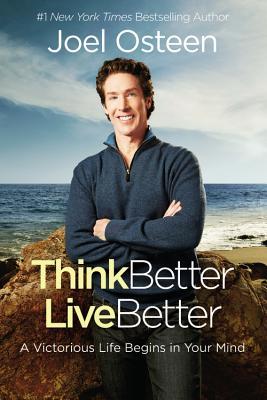
Review:Think Better, Live Better by Joel Osteen

Think Better, Live Better: Deleting Negative Thoughts, Labels, and Attitudes

I was in terrible need of something inspiring to read. Not even the Cubs winning the World Series after 108 years could pull me from this weird slump I've been in lately. To top it off, we've been having amazing weather the last few weeks here in the greater Chicagoland area... yet, here I was. Stuck and in an irreversible circle of blah.

Friday, March 28, 2014

Review: Success Through Stillness by Russell Simmons


When I initially threw my hat in the ring for a bid at winning Russell Simmons Success Through Stillness: Meditation Made Simple I didn't think I'd be picked. Honestly, I wasn't hoping to be picked either. Not because I didn't want to read his book, but because I only requested entered into the giveaway off of name recognition. I'm too young to really have lived the impact RunDMC had on the hip-hop community, yet young enough to know the profound mark Russell Simmons has made on, not only music, but business in general. I've always known him to be a mogul who yells at the top of his lungs in that adorable lisp that some may find a reason not to take him serious. I knew better.

Suffice it to say, once I got the notification that I'd won a copy, I was beyond ecstatic. Although I allowed some time to pass before devoting time to this self help book, I feel that I've read it at the perfect time in my life. I'm working more than 50 hours at my job some weeks, and trying to maintain going to school part time. If anyone was in need of a few moments of stillness I would be that perfect candidate. Sure I'm not running a multi-million dollar company, in charge of a team that caters to my every need, nor am I a pop culture icon that has a huge platform to change the minds of the mass. I'm just me. An average person who's problem are just as important to me as Simmons are to him. Enough about me. I step off my soap box now.

Success Through Stillness is Russell Simmons plea to the world that meditation can solve many problems. He hails meditation as being the Holy Grail and that everyone should get in on the action. This self-help book is written with an excitement that is often lacking in other books in this genre. I felt as excited about beginning meditating as Simmons sounds encouraging me.

What is most appealing about this novel is that it's not just 200+ pages of "Uncle Rush" repeating and drilling the success of meditation into the heads of readers, although that does happen, he offers proof. It's clear and apparent that he researched the benefits of meditation and presented his findings in the most approachable terms as possible. In the beginning chapters, he mentions the science of the art of meditation by revealing how it changes the corpus colloseum and allows each hemisphere of the brain to communicate in a more productive manner with each other. I'm currently taking a Psychology class so these revelations made so much sense. Yet, if I had no knowledge of the brain and it's parts such as the Amygdala, or Frontal Lobe and their functions, the language is approachable and engaging.

Besides using a scientific approach, Simmons provides studies conducted on the brain of one who practices meditation and one who doesn't. Simmons provides articles naming some of the top psychologists and their proof of the meditating's benefits. I love that he doesn't think that readers aren't smart enough to know that his opinion alone isn't enough to drastically change their daily lives. Who really wants to devote 20 minutes twice a day to something that may or may not actually work? I know I don't. Free or not. Between work, school, my reviews, and life that seems like a huge undertaking.

If the scientific benefits of meditating was not enough, Russell Simmons does not waste an opportunity to name drop. I'm not mad at him. I would too if I had friends such as Deepak Chopra, Ellen Degeneres, and Oprah. He says they too accredit their ability to balance their lives in a productive manner is due to meditating. 

Because Success Through Stillness is so engaging and inspiring, I almost forgot to read it objectively. Once I came back down from cloud 9, after reading more than 85% of the book, I realized I was no closer to knowing how to meditate than when I open the book. I bet you're saying there's nothing to it. Just sit in a lotus position and mumble some mumbo-jumbo. I'm a little more technical and in need of direction than others. And I only came to this conclusion when one of my co-workers passed my cube and asked me if the book I was reading was good. I answered "Yes!" Without hesitation. And then I said aloud "but I'm no closer to knowing how to meditate than when I began the book."

Ultimately, all concerns were rectified and I'm confident in having the tools needed to begin meditating. I appreciate Russell Simmons for writing this book along with Chris Morrow. Meditation was never on my list of things to try until reading Success Through Stillness. Meditation is worth the try. Essentially, it's just like Simmons says, I risk nothing in trying it except an enlightenment I've never experienced before. ****


Copy provided through Penguin Group via a Goodreads Giveaway

Thursday, December 5, 2013

Review: The Rejected Stone by Rev Al Sharpton


Won Through a Goodreads Giveaway

Honestly, I've never really known much about Rev. Al Sharpton besides the fact that he seemed to be a pretty popular caricature. From the moments where Kennan Thompson parodies him on SNL to the scene with Adam Sandler in the movie Mr. Deeds, I never was inclined to take the man seriously. I dropped my name in the hat of giveaway hopefuls in an effort to circumvent having to pay for something I wasn't too sure I wanted to invest my money in although I had a newfound interest in Al Sharpton.

The reason I wanted to findout more about this man is because I watch a lot of MSNBC. I wake up with joe(Scarborough that is), play hardball with Chris Matthews, and usually hear what the last word is with Lawrence O'Donnell. Basically, I wanted to know who this guy hosting Politics Nation was, bringing to light the injustice of Voter ID laws. Up until then I was convinced he wasn't someone I should take seriously.

The Rejected Stone by Al Sharpton opened my eyes to the person he is, was, and wants to be remembered as. Long past are the days of his ill-fitting tracksuits and frumpy figure. He has a more refined look now but his views are still the same. He's simply a man who came from humble beginnings hoping for all the world to see the value in EVERY human life. Yes he has accumulated a rolodex full of some of the most successful people to ever walk the planet, he's still more interested in making a difference.

Sharpton has gotten a reputation of being only interested in the "black" agenda. Touted as being a person who only comes running when there seems to be some sort of racial injustice, seems to not be the only cause he fights for. The Rejected Stone chronicles his life as an activist, preacher, and celebrity. Many times this memoir seems more or less a self-help book which is pretty enjoyable seeing as he has lots of relevant ideas towards growth and changing.

One of the most interesting endorsements Al Sharpton has made is his support of LGBT rights. Most mainstream religious figures find this to be taboo and an abomination to the very basic Christian fundamentals. Initially he was against the idea of these rights but started to see how the world is changing. To keep up with the change, he had to focus on the argument from a different perspective. Sharpton deduced that he can't have a lifetime of leading rallies for civil rights then choose to discriminate at will.

The Rejected Stone provides a chapter heading that works as either a motivational message or guiding light for life. Define Yourself-Before Others Do it For YouEvery Life Has Value, and a few others are snippets of his advice. This helps the book remain focused and easy to follow. The structure of this book helps it not be repetitive.

Because every person has "haters" the fact that this book is published by Cash Money Content has been a source of claiming Al Sharpton to be one of the many, greatest liars. How can someone who has fought against the use of defamating language do a book deal with a music label that is its top exploiter? I only mention this because he even addresses in the book his constant fight for people to see themselves as something greater. He doesn't change his message to appease Cash Money Content. I'm sorry that I don't have an opinion on this. I figure if a convicted felon is in jail, then is turned preacher, does it sully his message of inspiration? If he were to come out with a rap album about civil rights on Death Row Records should it make the message any less important? He does have a chapter aptly named Be Open to Unlikely Allies.

Surprisingly, The Rejected Stone was great insight to a man's life that I really had no knowledge of and I appreciate finally knowing more about this man than what a Wikipedia page can say. Sure, I saw him at Trayvon Martin rallies, heard the words he spoke at Michael Jackson's funeral, and remembered the cartoonish ways he used to dress, but I never really followed his career. He speaks of his highs, his lows, and why he's the most unlikely of the rejected stones to be where he is today.  **** 

Tuesday, November 26, 2013

Review: My Inappropriate Life by Heather McDonald


I was in serious need of some reading that was light, fun, and interesting. With that in mind, I was more than happy that the publishing company Simon & Schuster provided an ARC copy of Heather McDonald's My Inappropriate Life. In the interest of full disclosure, I was not a fan of hers, per se. At least not until now after having read this book. I was simply a person who had seen her on Chelsea LatelyAfter Lately, and in a few pictures with my favorite Bravo TV housewives.

Because I had a general idea that My Inappropriate Life would be funny, there's always a chance that jokes can fall flat or someone is just over-hyped in my mind because of their association. Her association with one of my favorite comedians and tv personalities, Chelsea Handler, made me assume she would be awesome and this memoir would be "laugh-out-loud" good. I admit it's pretty funny and I couldn't stop myself from imagining McDonald living this very inappropriate life.

What's most fun about this novel are the weird stories she relays. My favorite chapter has got to be the one about the pooping in a plane fiasco. There's also the chapter with Suze Orman that definitely had me smiling to myself. Thankfully McDonald doesn't have to name-drop too much by including hilarious moments that happen with her friends, family, and stuffed-animal children.

The most endearing quality to this book is although she is a celebrity of sorts, she doesn't take herself or her life too seriously. Often finding that she's on the outside looking in makes her voice unique and relatable. Although she's seen on television, and is clearly more of a celebrity than some of the PTA members she meets, she still has to deal with real life. Real life is teaching her children what words are inappropriate to use, standing in line at the amusement park, and dreaming of being a Bravo housewife. FYI, I wish I was a Bravo housewife.

So please, if you're interested in a fun, light read and you are neither a child, nun, or mature adult, I recommend reading Heather McDonald's My Inappropriate Life. Now, if only I still had the energy to stay up late on week nights to watch her in action onChelsea Lately, maybe then I can consider myself a super-fan.  ****

Monday, October 14, 2013

Review: Secrets of the Southern Belle by Phaedra Parks, Esq


Everybody knows that each franchise of the Bravo's hit series Real Housewives, there is one housewife that becomes a fan favorite. For me, that person is Phaedra Parks, Esq. of the Real Housewives of Atlanta. She's not the typical housewife who married into money and sits on her behind. She's an accomplished lawyer with a business savvy that rivels the best. I placed the bias for her aside in hopes of writing an impartial and honest review for the Netgalley provided copy of Secrets of the Southern Belle.

Phaedra Parks has written an advice book on how to be a Southern Belle which is her reality personality on the series so it's hard not to associate her with the advice given in the book and compare it to the show. There's no getting around it especially if the reader is familiar with the reality show. This isn't a bad thing because I think much of Parks actions and personality coincide with the advice given in Secrets of the Southern Belle. This provides a little more insight to fans of her actions. Now on to the book!


Secrets of the Southern Belle: How to Be Nice, Work Hard, Look Pretty, Have Fun, and Never Have an Off Moment let's us into the inside world of a true Southern Belle and exposes the secrets to her pulling it off without a hitch. Parks encourages women to take care of themselves and the rest of the world will too. She's not suggesting that Belle's behave like the feminist revolution never happened or to cater to any man's needs, but to simply put more effort into the person they present to the world. I love this idea. Most people are judged by there outside appearance so why not put your best foot forward?

One of the ways a Southern Belle can get what she wants is by being respectful, mannerful and establishing connections. Parks notes that manners mean a lot and many have forgotten this. My experience in customer service has made me more than happy to help Parks get this message out. There are rude people who need not be rude especially when that energy can be used at making a lasting connection with someone. Ultimately the goal of a Southern Belle is to make a connection with people by using "please" or "thank you". Even sending flowers, gifts, or thank you cards can be terms of endearment and a meaningful way to nurture that relationship.

What's a book about being a Southern Belle without giving advice about how to maintain your outward appearance? Parks gives sound advice that everybody should know such as under garments should remain just that. No one wants to see that you've been wearing the same underwear three days in a row. And much of the advice is not limited to just women. There's insight on how to raise young gentlemen worthy of a true Southern Belle. I admit I don't need 2-hours in the morning... but then again... maybe I do.

Now on to my gripes. I'm a northerner and was a little put off by the constant references to us as if we are from some other planet. I discussed this with my mother who's a southerner through and through (although she's been raised in the north) and she agrees with Phaedra Parks. There is a distinctly different culture I'm sure. My gripe is that the references almost take away from the charm of the book especially if a northerner takes it personally.

Everybody knows that this book oozes Phaedra Parks inside and out. During my read I could not keep her voice out of head. I liken it to having tea on the front porch with a good friend shooting the breeze.

Secrets of the Southern Belle is a fun, engrossing, and inspiring advice book that can have any girl on their way to becoming true Southern Belles. If that is not the goal of the reader, Parks provides sound advice in most areas in life, that the Southern Belle rules apply in hopes of becoming better people overall. I imagine fans of the Real Housewives are the intended audience, although I'd recommend this book to all my girlfriends.
****

Monday, September 30, 2013

Review: Skinnygirl Solutions by Bethenny Frankel


I admit I've never been a fan of Bethenny Frankel but am a little intrigued by her. I love everything Housewives and my television might actually but stuck on Bravo right now. Bethenny has always been one of the wives I am impartial to. Neither love or hate. Skinnygirl Solutions is almost like my becoming reacquainted with her and finding out what her appeal is.

Skinnygirl Solutions features Frankel's solutions for most any situation in an effort to live the Skinnygirl lifestyle or wellness. There are references to her other works such as Naturally Thinso the first chapter is primarily a crash course, overview with respect to what that self-help book is written about. The first half of Skinnygirl Solutions is all about food. For someone interested in losing weight and doing it Frankel's way is sure to find her no nonsense, sarcastic, and humorous approach a refreshing look at a genre that has been beaten to death.

Skinnygirl Solutions provides solutions to living a better well-rounded life. Frankl dispels any concern I had with her making a fatty like me feel like crap. No, she simply insists that Skinnygirl is about balance and finding what works for you. She mentions strategies that I may incorporate into my life such as picking my spot when to be a fatty and when not to be. I also like the advice of never eating out of a bag. I have to remember that when I'm sitting in my cubical about to snack on a bag of Cheetos.

Skinnygirl Solutions is organized well and contains very good advice but I couldn't help notice how repetitive the first half seemed. I figure that comes with the territory in books of this nature. Nothing works better at helping self than beating the fundamentals into your head.
Once Frankel provides solutions for cleaning house, entertaining guest, and organizing one's life the repetition ceased and I was able to really enjoy it. 

One other gripe are the shameless plugs for Skinnygirl bars, or cocktails, or cleanse products. I know you have to market your products but come on. Ironically enough those plugs have me thinking about trying one of those products... but really!?!??! It isn't enough that you're buying the book?

Overall, I would recommend Skinnygirl Solutions to anyone who's a Bethenny Frankel fan and is looking for a self-help book that isn't the norm. Although she reminds us that she isn't an expert, I figure who is?  *** 

Wednesday, March 20, 2013

Review of Ghosts of Jim Crow by F. Michael Higginbotham

Initially I didn't know how to approach this review without being longwinded so I decided to take the things that stood out to me most and use the same structure as the author F. Michael Higginbotham uses in Ghosts of Jim Crow: Ending Racism in Post-Racial America.  F. Michael Higginbotham is a tenured law professor at the University of Baltimore and the former Interim Dean at the University of Baltimore School of Law. I really appreciate the approach he used with this book in the fact that it's simple to digest so a broad audience can read it without the aide of a person familiar with legalese or a legalese for dummies book.

Higginbotham begins with a little background into his experiences with racism and how those instances shaped his reasoning behind a lot of his arguments in achieving ending structural and cultural racism and having a true post-racial society.  A post-racial society isn't meant in the sense of being color blind but a way of ending notions of racial victimization, racial hierarchy, isolation, or judgement perceptions being a way of the past and not practiced by the majority. Having the preface helps the reader to get to know the author and understand that he's coming from a place of honesty and that plights of one person are actually the plights of many. Although raised in an upper-class home with two parents and well educated, he was still subject to the many prejudices that have longstanding since the days of slavery.


The introduction and Part I explores how the racial paradigm was formed and how the mindsets of black inferiority and white superiority are widespread through society by the installation of laws to make it such. Laws that forbade slaves to read, be publicly tried without a judge or jury, and even them not being lawfully able to own property. These laws were of course in place to maintain white superiority and black inferiority ultimately leaving behind its many ghosts. As long as blacks remained uneducated, subservient, poor, and believe they are, the racial paradigm will not change. 

Part II further parallels how Jim Crow laws and the harmful effects it has made for our society today. Jim Crow laws gave the false sense of seperate yet equal but as we look back on the past we know this wasn't true. Blacks were systematically killed without judge or jury, given lower wages when compared to other whites with similar skills, and often under-educated because their schools didn't offer subjects that were on course with furthering their education. Even if the majority wanted to attend college, there were few accepted into college. Higginbotham also references the "white-flight" which left many urban areas at a disadvantage when it came to receiving government funding. There were even vouchers given to whites to help send their children to schools that did not accept blacks. Jim Crow influenced the races not to mix so notions of inferiority and superiorty never had a chance to change because neither knew much about the other.

Part III was the most interesting for me. I really enjoyed reading his ideas on how to acheive a true post-racial society. I am most in agreement with two points he makes such as equal funding to all schools. I went to a elementary magnet school and I understand the importance of having an education. I also believe that every child should at least have a chance to have a level playing field. When an ENTIRE society is better educated the ENTIRE society benefits. There are better job opportunities, more self-worth and less actions of crime and violence. When people are aware of their options they can make better more informed decisions. It's no secret that inner cities such as Detroit and Chicago have a heavy gang presence as well as high crime rates but an effort to keep children in school can decrease these occurances which are heavily associated with blacks. This will help keep jails from being so crowded with black and latinos who are sentenced at disproportionate rates when compared to identical crimes committed by whites.

The second idea I agree with completely that Higginbotham states is for blacks to take advantage of how far things have come since the days of Jim Crow and not to play the victim. Taking responsibility of one's own life is a pretty popular idea. Blacks being associated with being takers or lazy is so far embedded into the racial paradigm that people reference our president as "the food-stamp" president, asking for his background check, and suggesting that he produce his grades or birth certificate. These social prejudices can only be changed if we accept the challenge and change them. Blacks referencing that another black is "acting white" only further suggests that being white is better than being black and hinders the movement towards a post-racist society.

There are many more points Higginbotham argues pretty convincingly and it was a pleasure to read his insight into ways we can change the racial landscape of our society. I tried to be as brief as possible but Higginbotham refereces a lot in this well researched book. I suggest this book for everyone. It was interesting to see how the ghosts of Jim Crow are still lurking where they really shouldn't be.****

Tuesday, March 19, 2013

Ghosts of Jim Crow... Alive!

So far I'm currently 50% in this book and have just reached Part II in the novel Ghosts of Jim Crow by F. Michael Higginbotham.  The beginning starts off with Higginbotham recounting his younger years and some of the racial injustices that stood out in his life. He grew up in an upper-class family and went to really good schools but still endured racism, albeit different than blacks from a different social class, but still so overt that he became at one point integration fatigued. I really like that expression "integration fatigue". I was not raised in a wealthy home but my upbringing in the suburbs, and some twenty years later, helps me to understand his plight.

Honestly I don't know where I should begin with describing this book. In Part I of the book, Higginbotham goes over legal precedent that made slavery legal and how law was used to dehumanize blacks as well as elevate whites becoming the main fuel in black inferiority and white superiority. These structural policies are used to promote inequality and ultimately damage any hopes of becoming a society free of racism or bias. He mentions laws that forbade slaves to read therefore making them appear to be uncivilized or dumb. The laws that gave slave owners the right to punish slaves as they please even up to killing them, also further exacerbates the idea of white superiority and black victimization. The next step in the legal process was the emancipation of slavery which led to a lot of new laws put in place to keep the playing fields for whites and blacks imbalanced and uneven.


Higginbotham brings us next to the laws that which the book is named for: Jim Crow Laws. Here Higginbotham shows how these laws not only separate blacks and whites, but does it in a way that blacks would still feel inferior even if they were well off.  In the case of Plessy v. Ferguson, the decision to uphold the constitutionality of "seperate but equal" in public facilities continued in the way of promoting black inferiority. Many of the public places labeled as okay to use for blacks were in disrepair, ill-funded,  and not up to same standards as white's only public places. This case upheld the states "seperate but equal" policies but completely ignored the fact that the states failed to make anything equal. Plessy v. Ferguson ushered in the Reconstruction Era and led the way for future and further segregation laws.

This same approach with being seperate but very clearly unequal translates the same with regard to education and housing. Many blacks were placed into schools that did not have adequate materials nor teachers able to teach them adequately. This helps to further blacks being at a disparate level compared to whites. Blacks are viewed as dumb or lazy and unable to maintain control of their lives because of laws passed during the Jim Crow Era. Underfunded schools lead to lower education levels. Inabilities to get employment affects being able to obtain a loan for property. I mention these because they are among the many prejudices that black people face today. Sadly, Brown v. Board of Education, only shifted the playing fields slightly.

There is so much I want to discuss and there is so much to be learned from this book. Although the stories of inequalities are not new to Americans, the idea that we haven't moved as far along as we can by now is what is most sad. There are still ghosts of Jim Crow that linger in a way that place blacks at a disadvantage and further fuel the idea of white superiority. The fact that our President is black has not done enough especially when there are still other public officials who are interested in calling him lazy, labeling him the welfare president, or a schuck-and-jive-er. Although much racism is not as overt as it was only 60 years ago, the rate of imbalance between the two races are still staggering.  I look forward to finishing this novel by tomorrow and posting my thoughts on it there. Until then... Let's Read.


Monday, March 18, 2013

Ghosts of Jim Crow by F. Michael Higginbotham

I end work today on Ghosts of Jim Crow: Ending Racism in Post-Racial America by F. Michael Higginbotham. I'm eager to find out what I can learn from this work. I honestly don't know if their will ever be a post-racial America but I can dream that it's possible. I can't wait to read what arguments the professor of law at University of Baltimore School of Law has for achieving an actual post-racial America. Really I'm just excited to finally be reading this.


Synopsis: When America inaugurated its first African American president, in 2009, many wondered if the country had finally become a "post-racial" society. Was this the dawning of a new era, in which America, a nation nearly severed in half by slavery, and whose racial fault lines are arguably among its most enduring traits, would at last move beyond race with the election of Barack Hussein Obama? In Ghosts of Jim Crow, F. Michael Higginbotham convincingly argues that America remains far away from that imagined utopia. Indeed, the shadows of Jim Crow era laws and attitudes continue to perpetuate insidious, systemic prejudice and racism in the 21st century. Higginbotham's extensive research demonstrates how laws and actions have been used to maintain a racial paradigm of hierarchy and separation—both historically, in the era of lynch mobs and segregation, and today—legally, economically, educationally and socially. Using history as a roadmap, Higginbotham arrives at a provocative solution for ridding the nation of Jim Crow's ghost, suggesting that legal and political reform can successfully create a post-racial America, but only if it inspires whites and blacks to significantly alter behaviors and attitudes of race-based superiority and victimization. He argues that America will never achieve its full potential unless it truly enters a post-racial era, and believes that time is of the essence as competition increases globally.


Wednesday, March 6, 2013

Review of The Black Russian by Vladimir Alexandrov

I don't read too many biographies but I was excited to read The Black Russian because of its title and star Frederick Bruce Thomas. Although I hadn't heard anything about Thomas, my interest in a black Russian trumped his notoriety or lack thereof. The Black Russian tells the story of a man born in 1872 to freed slaves. His parents Lewis and India's farm in the Delta, became very prosperous.  Of course, this didn't sit well with the times and their family was taken advantage of by a rich landowner. They fled their home in Mississippi to Memphis. It is because of these very circumstances that as an adult Frederick Thomas sought refuge in Europe.

After criscrossing and learning very useful trades in Europe, Thomas decides to go to Russia. In 1899 he makes the voyage and the rest is history... but not really. Alexandrov could have easily written this without Thomas, but the use of Thomas makes the story real and relatable. Thomas initially went to Europe to escape America but not for criminal reasons. He left because he wanted to be able to live like any human should be able to: Free. He chose not to live in Mississippi and risk getting lynched or in the poverty of the Chicago and New York slums. He wanted more and found that going to Europe would be his best bet.

Once arriving, the heavy cloak of his skin color was not the same burden as it was in America. His skin color was merely a way to describe his physical attributes. I love this! The hate he felt from Americans on account of his skin being black, did not exist in the countries he traveled to throughout Europe. In Russia and Constantinople, it was the same case. I should stop here because I don't want to give away the whole biography, which is powerful in it's own right.


Alexandrov helps the reader who isn't familiar with Russian history get a grasp of what was happening around Thomas during his time in Russia. The most detailed era is during the Russian Revolution of 1917.  I noticed the strong cultural messages in this biography that are extremely relevant even today. There was mention of America's irony and how they abhorred the Russian's anti-semiticism (and rightfully so) but at that point in history, 1905-, the use of Jim Crow laws and the treatment of Chinese citizenship being blocked by racist laws proved just how hypocritical American's can be. How can America be such a huge beacon of light for the world when they won't change the problems they have?

Ultimately this is a biography worth reading of a man from humble beginnings who went to Europe and became successful. And then the Russian Revolution changed the rules dramatically. A man who was ousted because of his race was once more ousted because of his class. I think many will find this well researched biography an entertaining read. I couldn't help but be interested in this man's life. A black Russian is a rare thing and I'm glad the interest in wanting to know their experience, led me to this title. ****

The Black Russian by Vladimir Alexandrov

I am currently reading The Black Russian by Vladimir Alexandrov. My intent was to read it during Black History Month, but I was a little behind on my required reading but I'm happy to now have the chance to dig into this biography about an extraordinary man born after the abolishment of slavery during the 1800s. It seems sometimes that a lot of black American's take for granted that this was not that long ago and many prejudices will not subside until we lead extraordinary lives. Lives that don't include killing each other, expecting a government check when we are able bodied, or the victim mentality that many still harbor dear. I love reading about success stories, even if they end not so successfully.


Synopsis:  The Black Russian is an incredible story of a man named Frederick Bruce Thomas born in 1872 to former slaves. Through hardwork his parents become successful until a wealthy farmer attempts to steal their land and scares them out of the Delta to Memphis. After criscrossing Europe, Thomas chooses to go to Russia in 1899 and made Moscow his home. This biography tells the life and times of a rags to riches to rags story of a black Russian.